Wrightia Tinctoria is a less internationally known herb than Ashwagandha or Tribulus, but within South Asian traditional medicine, its seeds have a specific and long-documented use: supporting seminal health in men. It's the second-highest-dosed ingredient in Afrovit-SR after Ashwagandha, at 40mg per caplet — so it's worth explaining clearly, including where the science is still developing.
What Is Wrightia Tinctoria?
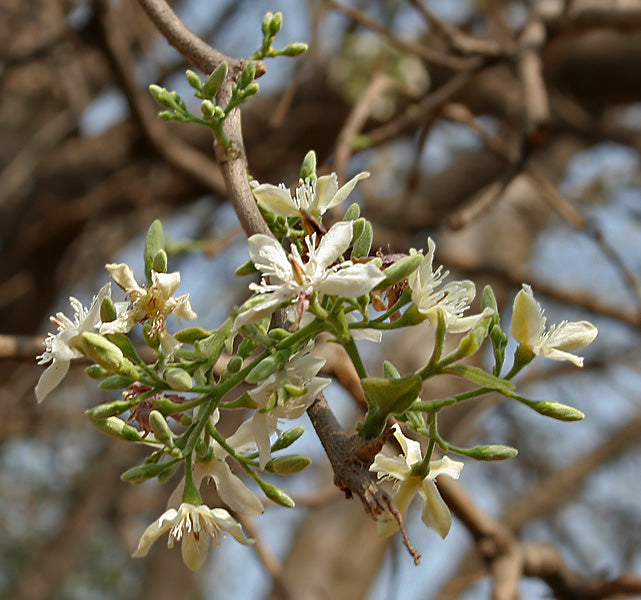
Also known as Indrajau or the sweet indrajao tree, Wrightia tinctoria is a flowering tree native to India and Sri Lanka, historically used in Ayurveda and Unani medicine. Different parts of the plant have different traditional applications — the bark is used in skin conditions, while the seeds are the part traditionally used for male reproductive and seminal support, which is the use relevant to Afrovit-SR.
What the Research Actually Shows — An Honest Picture
This is an ingredient where precision matters. The plant's pharmacological research is genuinely mixed depending on which part of the plant and which effect is being studied:
- Wrightia tinctoria contains well-documented bioactive triterpenoids — lupeol, β-amyrin, and β-sitosterol — which have demonstrated hepatoprotective, anti-inflammatory, and analgesic properties in pharmacological studies.
- Separately, some animal studies on the plant's stem bark extract found antifertility (contraceptive) activity, related to pro-estrogenic effects — a finding that applies to a different plant part and a different traditional use case than the seed's classical role in seminal health.
- The traditional use of the seed specifically for "seminal weakness" (a classical Unani term closer to premature ejaculation and general seminal vigor than to fertility or testosterone) is well documented in traditional pharmacopeias, but has not been validated in modern human clinical trials.
We think it's more useful to be upfront about this than to overstate it: Wrightia Tinctoria's inclusion in Afrovit-SR reflects a specific, long-standing traditional indication (seed use for seminal health) rather than a herb with strong modern clinical trial backing. That's true of several ingredients in traditional Unani formulations, and it's part of why formulas combine many herbs rather than relying on one.
Wrightia Tinctoria's Role in Afrovit-SR
Afrovit-SR includes 40mg of Wrightia Tinctoria per caplet, reflecting its traditional role in supporting seminal health and general reproductive wellness within the broader 18-herb formula — working alongside Ashwagandha, Tribulus, and Akarkara rather than as a standalone active ingredient.
As with all Afrovit-SR ingredients, this is intended to support general wellness, not to diagnose, treat, or cure any medical condition.
Frequently Asked Questions
Does Wrightia Tinctoria affect fertility?
The antifertility findings in research come from stem bark extract studies in animals — a different plant part and preparation than the seed used traditionally (and in Afrovit-SR) for seminal health. The two shouldn't be conflated.
Is there human clinical trial data on Wrightia Tinctoria for seminal health?
Not yet at a large scale. Its use is grounded in long-standing traditional Unani and Ayurvedic practice rather than modern RCTs — an honest limitation we think is worth stating plainly.
Why include it if the human evidence is limited?
Because Unani medicine's traditional formulations are built from centuries of accumulated clinical observation, and Wrightia's seed use for this specific purpose is well established in that tradition, even where modern trials haven't yet caught up.
Afrovit-SR includes 40mg of Wrightia Tinctoria as part of its 18-herb traditional formula. Available with cash on delivery and free shipping across Pakistan at slanaturals.com, or order directly via WhatsApp.
References
- "A Review on Phytochemical, Pharmacological, and Pharmacognostical Profile of Wrightia tinctoria: Adulterant of Kurchi." PubMed, 2014. PubMed
- "Postcoital Interceptive Activity of Wrightia tinctoria in Sprague-Dawley Rats: A Preliminary Study." PubMed, 2008. PubMed
- "Wrightia tinctoria: A Review." International Journal of Homoeopathic Sciences. Link

Leave a comment
This site is protected by hCaptcha and the hCaptcha Privacy Policy and Terms of Service apply.